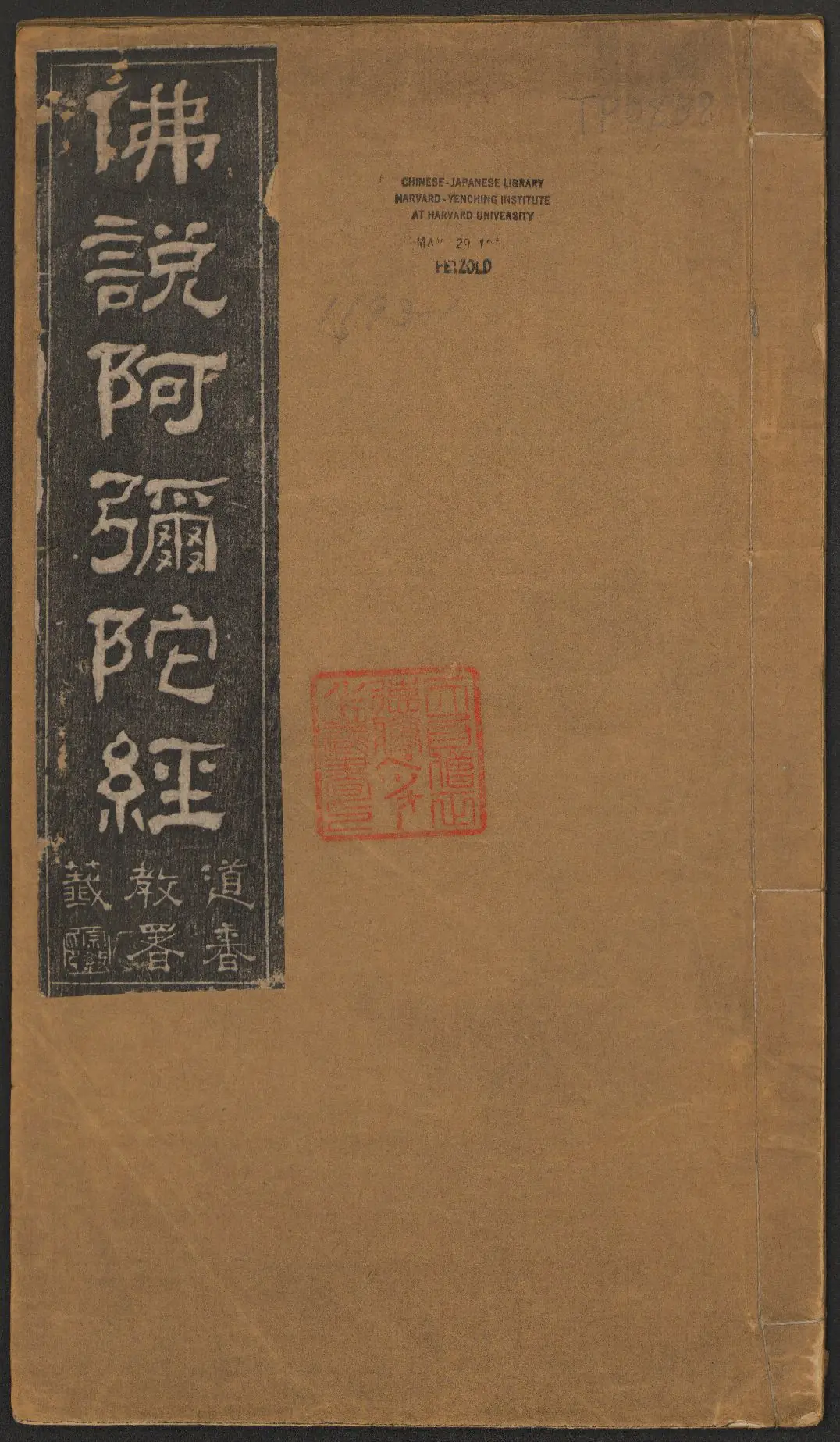
Image Info
No dedicated pictorial transformations (jingbian) were observed; the item consists mainly of calligraphic sutra pages and rubbing pages with colophons.
Manuscript ID: OPENSUTRA_ORG_0000033
Calligraphy by Wang Daigong; colophon by Wang Kaiyun; 18th year of Guangxu (Qing); Republic-era rubbing
“The Buddha Speaks the Amitabha Sutra” is one of the core scriptures of the Pure Land school. This item is attributed to calligraphy by Wang Daigong and a colophon by Wang Kaiyun, from the eighteenth year of the Guangxu reign of the Qing dynasty, with a Republican-period rubbing, possessing value as a canonical text, calligraphy work, and transmitted rubbing.
Login to download
Volumes 1 · 1 / 1
Preview up to the first 10 pages; open the original viewer for complete images.
No dedicated pictorial transformations (jingbian) were observed; the item consists mainly of calligraphic sutra pages and rubbing pages with colophons.
Translated by Kumārajīva of the Later Qin; calligraphy by Wang Daigong; colophon by Wang Kaiyun.
PDF, 27 pages in total; Republic-era rubbing images.
Title, scribe, colophon author, date, and rubbing format recorded from page images.
OpenSutra compiled and published; title and edition information recorded from page images.
The ancient text is in the public domain; the rubbing images are provided for browsing, research, and compilation/display.
CBETA "The Buddha Speaks the Amitabha Sutra" T0366: https://cbetaonline.dila.edu.tw/zh/T0366 Wikipedia "Amitabha Sutra": https://zh.wikipedia.org/wiki/%E9%98%BF%E5%BC%A5%E9%99%80%E7%BB%8F Wikipedia "Wang Kaiyun": https://zh.wikipedia.org/wiki/%E7%8E%8B%E9%97%BF%E8%BF%90
OpenSutra
Comments
No comments yet.